
What Is a Seamless Pattern? Complete Beginner’s Guide

A beautiful pattern can instantly transform an ordinary product, design, or digital artwork into something eye-catching. From wallpaper and fabric to packaging, websites, digital planners, and printable products, repeating designs are everywhere. But what makes some patterns flow perfectly without visible breaks? The answer is a seamless pattern.
If you are wondering what is a seamless pattern, this beginner’s guide explains everything you need to know. You’ll learn how seamless patterns work, where they are used, how to create them, popular pattern types, common mistakes to avoid, and practical tips for designing professional-quality repeating patterns.
Whether you’re a graphic designer, digital artist, Etsy seller, surface pattern designer, or simply curious about pattern design, understanding seamless patterns can open up countless creative possibilities.
What Is a Seamless Pattern?
A seamless pattern, also known as a repeating pattern or tileable pattern, is a design that can repeat continuously in any direction without showing visible edges, gaps, or interruptions.
Imagine placing the same square image side by side repeatedly. If the design connects perfectly at every edge, creating one continuous visual surface, it is seamless.
For example, a floral illustration might contain flowers that extend beyond the right edge of a design tile. Those same flowers must continue naturally from the left edge when the tile repeats. The same principle applies to the top and bottom edges.
A seamless pattern usually consists of:
- A repeating design tile
- Motifs or graphic elements
- Consistent edge alignment
- Balanced spacing
- A repeat structure
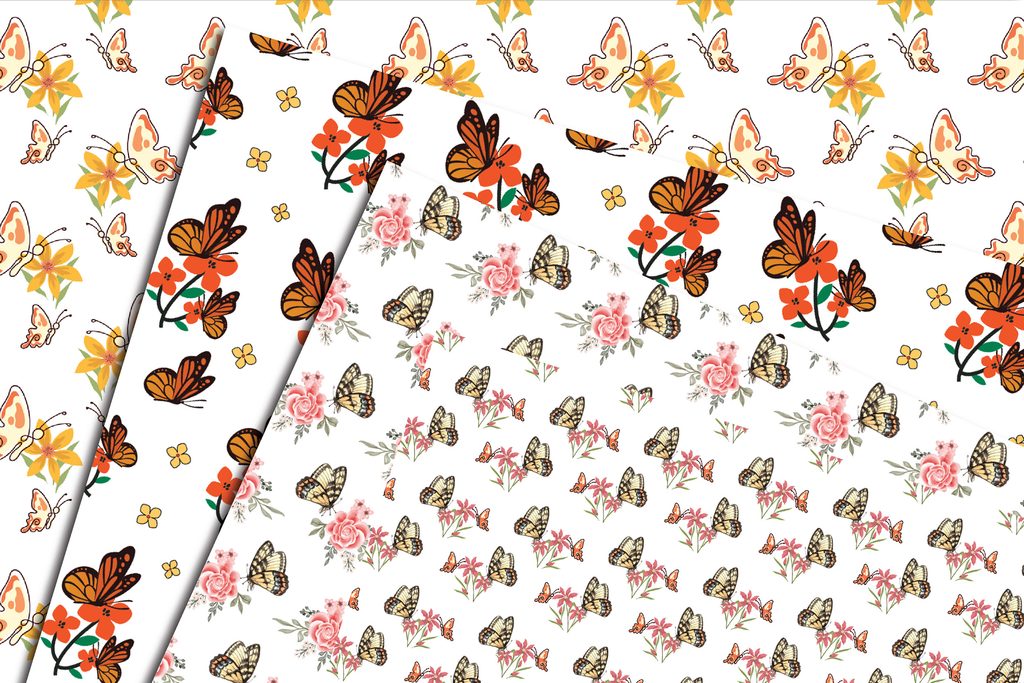
The viewer should not be able to easily identify where one tile ends and the next one begins.
Simple Definition
A seamless pattern is a repeating design that connects perfectly at its edges, allowing it to continue infinitely without visible seams.
This makes seamless patterns extremely useful for products and surfaces that require continuous decoration.
How Does a Seamless Pattern Work?
Every seamless pattern begins with a single design unit called a pattern tile.
This tile is repeated horizontally, vertically, or diagonally. When the edges are designed correctly, each copy connects naturally with the surrounding copies.
For example:
| Pattern Element | How It Works |
| Base tile | The original square or rectangle |
| Motifs | Objects such as flowers, leaves, animals, or shapes |
| Repeat | The tile is duplicated repeatedly |
| Edge alignment | Elements connect across tile boundaries |
| Final result | A continuous repeating surface |
Think of a seamless pattern like a puzzle piece that can connect endlessly.
A properly designed tile should work like this:
- Create one design tile.
- Duplicate it horizontally.
- Duplicate it vertically.
- Check whether the edges connect naturally.
- Repeat the tile across a larger canvas.
If you can see obvious lines, gaps, or sudden changes where the tiles meet, the pattern needs adjustment.
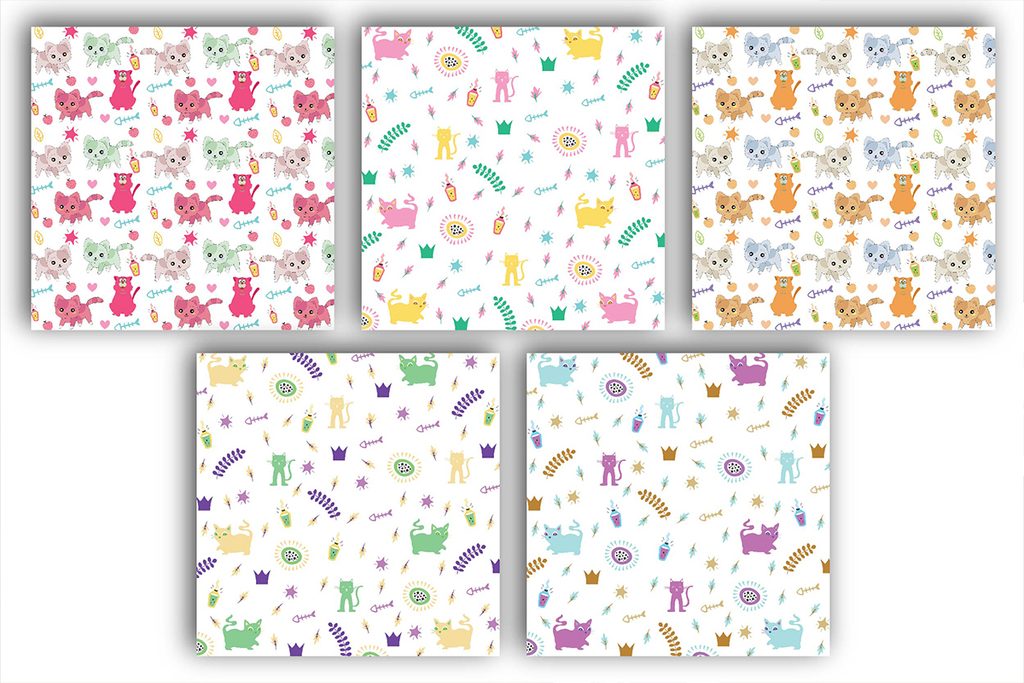
Why Are Seamless Patterns So Popular?
Seamless patterns are popular because they are incredibly versatile. One small design can cover a large surface without requiring a completely new illustration.
A single seamless pattern can be used for:
- Fabric printing
- Wallpaper
- Gift wrapping
- Product packaging
- Website backgrounds
- Digital papers
- Phone cases
- Stationery
- Printable products
- Social media graphics
- Home décor
- Clothing
- Scrapbooking
- Digital planners
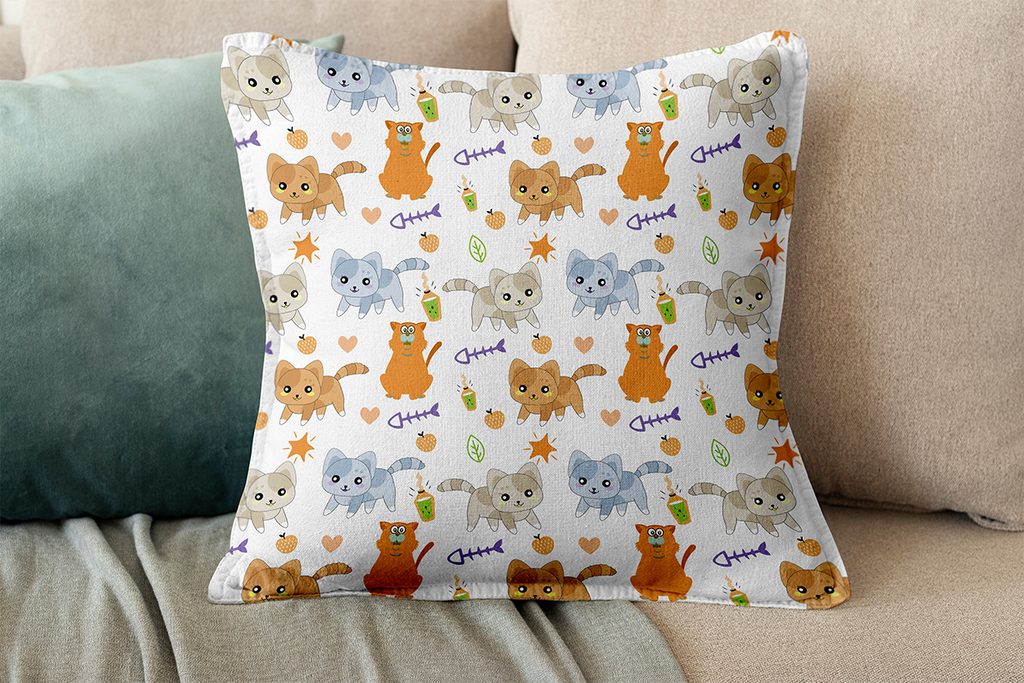
For designers and digital product sellers, this makes seamless patterns highly valuable.
Instead of creating a new background for every project, you can design one high-quality repeat pattern and use it across multiple applications.
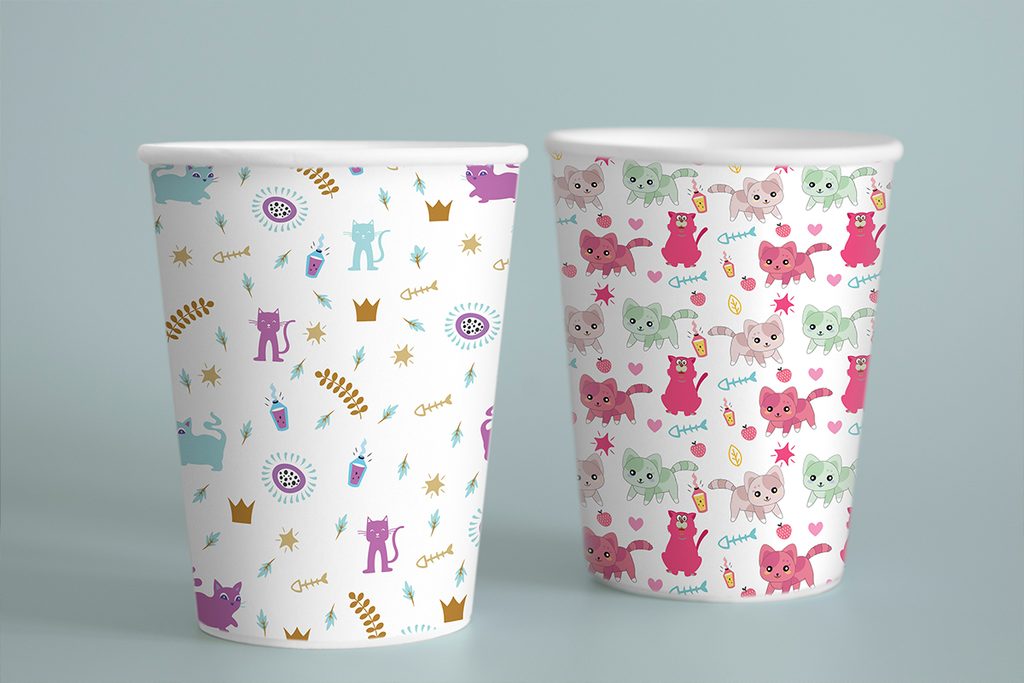
Common Types of Seamless Patterns
There are several different types of repeating patterns. Understanding these structures can help you choose the best approach for your design.
Basic Grid Repeat
A basic grid repeat is the simplest type of seamless pattern.
The pattern tile repeats directly:
- Left to right
- Top to bottom
Each copy is positioned evenly next to the previous tile.
This style works well for:
- Geometric patterns
- Polka dots
- Simple icons
- Minimal designs
It is easy to create but can sometimes look too predictable.
Half-Drop Repeat
A half-drop repeat shifts every second row horizontally by half the width of the pattern tile.
This creates a more natural and visually interesting layout.
Half-drop patterns are commonly used for:
- Floral patterns
- Botanical illustrations
- Organic designs
- Surface pattern design
Because the motifs do not line up in a strict grid, the result often feels more dynamic.
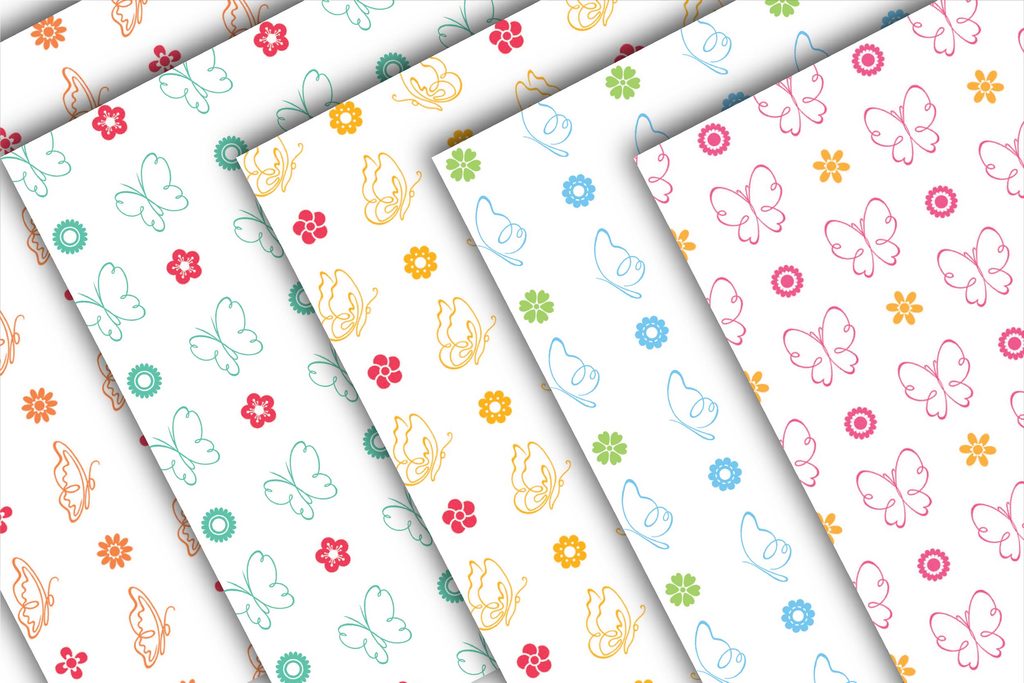
Brick Repeat
A brick repeat works similarly to a half-drop repeat but usually shifts the design vertically.
The arrangement resembles the layout of bricks in a wall.
This type of pattern works especially well for:
- Abstract artwork
- Hand-drawn illustrations
- Geometric shapes
- Decorative motifs
Random Repeat
A random repeat uses elements arranged in a less predictable way.
The goal is to make the pattern feel natural while maintaining seamless connections.
Random repeats are popular for:
- Tropical patterns
- Animal illustrations
- Watercolor artwork
- Complex floral designs
However, they require more careful planning because poor spacing can create unwanted visual clusters or empty areas.
Seamless Pattern vs Regular Pattern
Although the terms are sometimes used interchangeably, not every pattern is truly seamless.
| Feature | Seamless Pattern | Regular Pattern |
| Repeats infinitely | Yes | Not always |
| Visible edges | No | May have visible boundaries |
| Tileable | Yes | Sometimes |
| Suitable for large surfaces | Excellent | Limited |
| Used for printing | Very common | Depends on design |
| Professional scalability | High | Varies |
A seamless pattern is specifically designed to repeat continuously.
For example, a decorative image with flowers may look like a pattern, but if the edges do not connect when duplicated, it is not technically seamless.
Where Are Seamless Patterns Used?
One of the biggest advantages of seamless pattern design is its wide range of applications.
Textile and Fashion Design
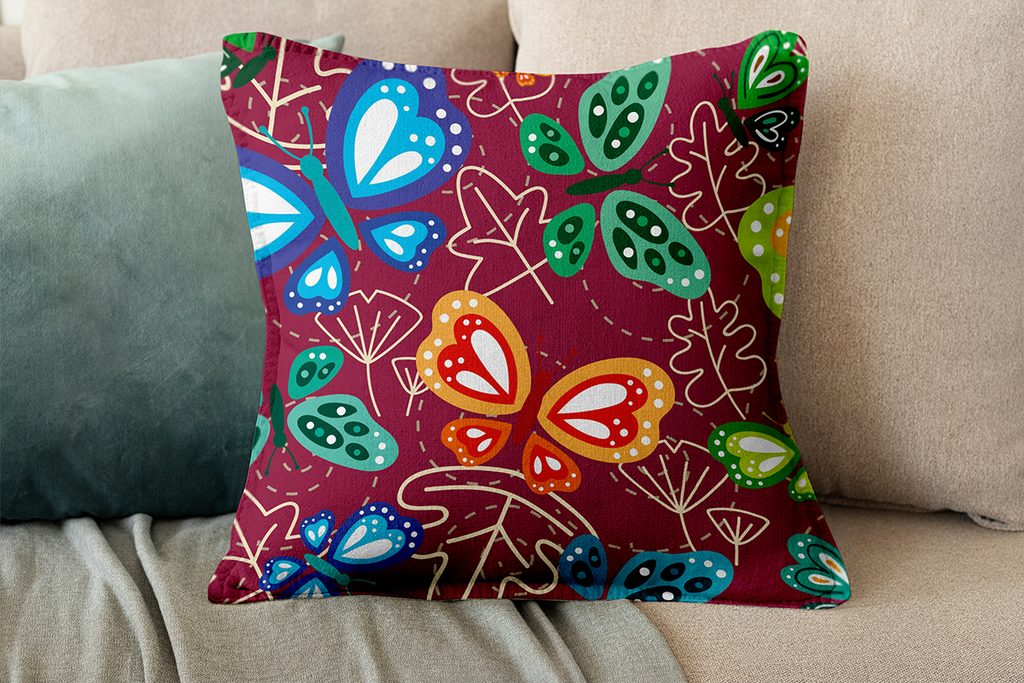
Seamless patterns are heavily used in fabrics.
Examples include:
- T-shirts
- Dresses
- Scarves
- Bedding
- Curtains
- Upholstery
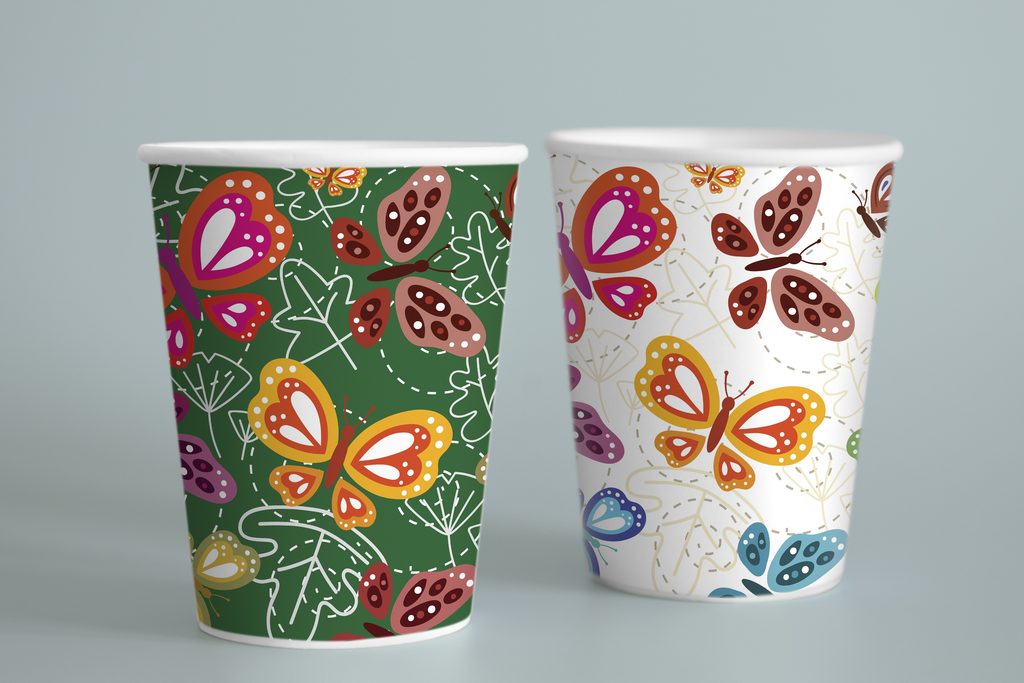
A repeating pattern allows manufacturers to print continuous designs across large rolls of fabric.
Wallpaper and Interior Design
Wallpaper is another perfect example of seamless pattern usage.
Repeating designs allow walls to be covered without obvious design interruptions.
Popular wallpaper patterns include:
- Floral patterns
- Geometric designs
- Abstract patterns
- Botanical illustrations
- Children’s patterns
Digital Products
Digital seamless patterns are widely used in online marketplaces and creative businesses.
Designers often sell:
- Digital paper packs
- Printable backgrounds
- Scrapbook papers
- Planner backgrounds
- Invitation templates
A high-quality seamless pattern can become a reusable digital asset.
Packaging Design
Many brands use repeating patterns for:
- Product boxes
- Shopping bags
- Tissue paper
- Food packaging
- Cosmetic packaging
A consistent repeating pattern can strengthen brand identity and make packaging more memorable.
How to Create a Seamless Pattern
Creating a seamless pattern may sound complicated, but beginners can learn the process with practice.
Here is a simple workflow.
Step 1: Choose Your Theme
Start with a clear concept.
Popular seamless pattern themes include:
- Flowers
- Leaves
- Fruits
- Animals
- Geometric shapes
- Seasonal elements
- Food illustrations
- Abstract objects
Try to choose elements that work well together.
For example, a summer pattern might include:
- Palm leaves
- Sunglasses
- Tropical flowers
- Fruits
- Beach accessoriese must continue from the opposite edge.
For example:
- Right edge connects to left edge
- Top edge connects to bottom edge
Most professional design software provides pattern-making tools or offset functions that make this process easier.
is seamless without testing it.
Duplicate your pattern tile multiple times.
For example:
- Create a 3 × 3 grid
- Create a larger background
- Zoom out
- Look for visible seams
Testing helps identify problems that may not be obvious when viewing a single tile.
Best Software for Creating Seamless Patterns
Different tools are suitable for different design styles.
Adobe Illustrator
Adobe Illustrator is one of the most popular tools for seamless pattern design.
It is ideal for:
- Vector illustrations
- Professional pattern design
- Scalable graphics
- Complex repeats
Its pattern creation tools can speed up the workflow significantly.
Adobe Photoshop
Photoshop is useful for raster-based seamless patterns.
It works particularly well for:
- Photo-based patterns
- Textures
- Digital artwork
- Mixed media designs
However, resizing raster patterns too much can reduce image quality.
Procreate
Procreate is popular among digital artists who create hand-drawn illustrations.
It is excellent for:
- Hand-drawn motifs
- Watercolor designs
- Illustrative patterns
- iPad-based workflows
Artists can create motifs in Procreate and later assemble seamless repeats using additional tools or workflows.
Affinity Designer
Affinity Designer is a strong alternative for designers looking for professional vector design capabilities.
It is useful for creating:
- Vector motifs
- Repeat patterns
- Surface designs
- Commercial digital products
Important Design Principles for Better Seamless Patterns
Creating a technically seamless design is only part of the process. A good pattern should also look visually balanced.
Maintain Consistent Spacing
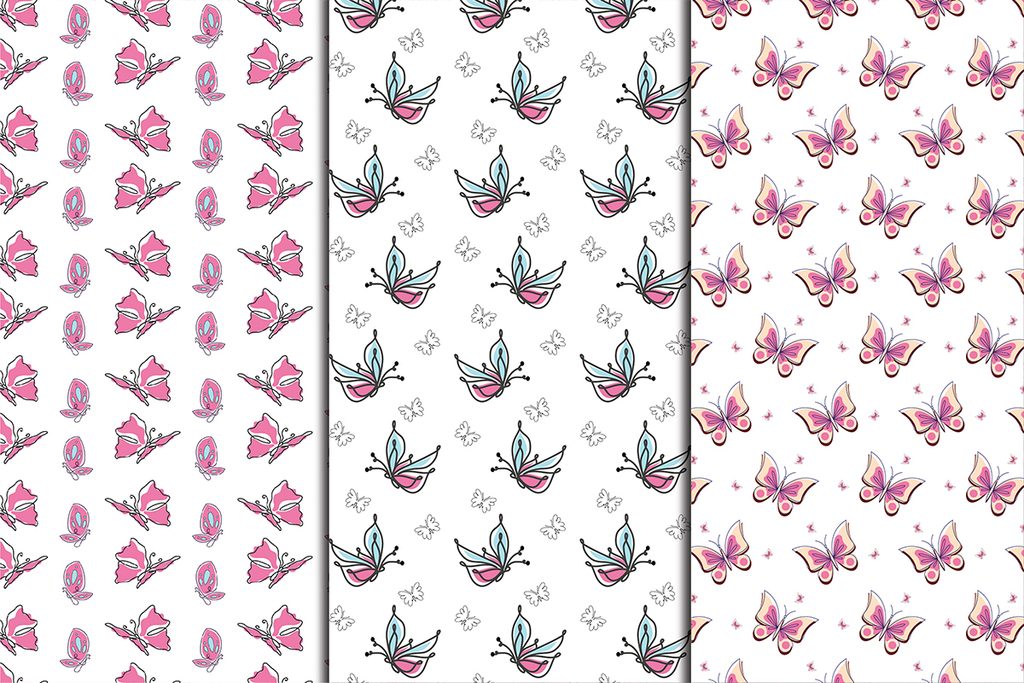
Uneven spacing can make a pattern feel awkward.
Avoid:
- Large empty areas
- Overcrowded sections
- Accidental clusters
Try to distribute elements naturally throughout the design.
Use a Balanced Color Palette
Too many unrelated colors can make a pattern overwhelming.
A practical approach is to start with:
- One dominant color
- Two or three supporting colors
- One accent color
This creates visual harmony.
Vary Motif Size
Using identical-sized objects throughout the pattern can make it feel repetitive.
Try combining:
- Large motifs
- Medium motifs
- Small filler elements
This creates depth and movement.
Avoid Obvious Repetition
One of the most common mistakes is creating a pattern where the repeated tile is immediately visible.
If viewers can quickly identify the same flower or object appearing in identical positions, the design may feel mechanical.
Rotate, resize, or reposition motifs when appropriate.
Common Mistakes to Avoid
Even experienced designers sometimes make mistakes when creating repeating patterns.
Visible Seams
This is the most obvious problem.
Always test your design by repeating the tile multiple times.
Empty Spaces
Large blank areas can disrupt visual balance.
Use smaller motifs or decorative elements to fill awkward spaces.
Too Much Detail
Complex designs can become visually overwhelming when repeated.
Remember that a pattern will often cover a large area.
A design that looks good as a single tile may feel too busy when repeated 100 times.
Poor Color Contrast
Colors that are too similar can cause motifs to blend into the background.
Make sure important elements remain visible.
Ignoring Scale
A pattern may look great on a computer screen but appear completely different when printed.
Always test different scales.
For example:
- Small scale for stationery
- Medium scale for fabric
- Large scale for wallpaper
Practical Tips for Creating Professional Seamless Patterns
If you want your patterns to look more polished, consider these expert recommendations.
- Start simple. Simple patterns are easier to test and refine.
- Use a limited color palette. This improves visual consistency.
- Create multiple variations. Change colors, backgrounds, or motif arrangements.
- Test at different scales. A pattern should work beyond the original canvas size.
- Check the edges carefully. Even a small misalignment can create visible seams.
- Create collections. A main pattern can be supported by smaller coordinating patterns.
- Keep source files organized. Use layers and clearly named elements.
- Consider commercial applications. Think about where customers may use the design.
How to Use Seamless Patterns in Digital Products
Seamless patterns are particularly valuable for digital product businesses.
One pattern can be transformed into multiple products.
For example, a floral seamless pattern collection could become:
- Digital papers
- Printable journal pages
- Planner inserts
- Phone wallpapers
- Website backgrounds
- Social media templates
- Invitation backgrounds
This allows designers to create product collections rather than selling only individual graphics.
When preparing patterns for sale, consider offering multiple file formats.
Common options include:
- JPG
- PNG
- SVG
- EPS
- AI
The best format depends on whether the customer needs raster images, transparent backgrounds, or scalable vector artwork.
How to Check Whether a Pattern Is Truly Seamless
Before publishing or printing your design, perform a simple repeat test.
The 3 × 3 Test
Create nine copies of your pattern tile.
Arrange them in a grid:
- Three across
- Three down
Then inspect the connections.
Look for:
- Broken lines
- Sudden color changes
- Misaligned objects
- Empty gaps
- Repeated clusters
Zoom out as well as zoom in.
A pattern may look seamless at close range but reveal obvious repetition when viewed from a distance.
FAQ: Seamless Pattern Questions Beginners Ask
What is the difference between a seamless pattern and a repeating pattern?
A seamless pattern is a type of repeating pattern designed so its edges connect perfectly. While many repeating patterns repeat a design, a seamless pattern creates a continuous surface without visible borders or breaks.
What makes a pattern seamless?
A pattern becomes seamless when the left and right edges match correctly and the top and bottom edges also connect. When the tile is duplicated repeatedly, there should be no visible seams, gaps, or interruptions.
What file format is best for seamless patterns?
JPG and PNG files are commonly used for digital backgrounds, while SVG, EPS, and AI files are better for scalable vector patterns. For commercial design work, offering both raster and vector formats can provide greater flexibility.
Can beginners create seamless patterns?
Yes. Beginners can start with simple geometric shapes or basic illustrations. Pattern-making tools in software such as Adobe Illustrator and Photoshop can make the process easier. The key is testing the repeat carefully.
Are seamless patterns good for selling digital products?
Yes. Seamless patterns are popular digital assets because customers can use them across many projects. They are commonly sold as digital paper packs, printable backgrounds, fabric designs, and design resources.
What is a pattern tile?
A pattern tile is the original design unit that repeats to create a seamless pattern. When the tile connects correctly with copies of itself, it can create an infinitely repeating design.
How do I know if my pattern has visible seams?
The easiest method is to duplicate the pattern tile several times in a grid. A 3 × 3 or larger preview will quickly reveal gaps, misaligned elements, or obvious boundaries.
Final Thoughts
Understanding what a seamless pattern is is the first step toward creating professional repeating designs for print, digital products, fashion, branding, and surface design.
At its core, a seamless pattern is a carefully designed tile that can repeat endlessly without visible breaks. But creating an effective pattern involves more than connecting edges. Strong patterns also require balanced spacing, thoughtful colors, well-designed motifs, and proper testing.
For beginners, the best approach is to start with simple designs and gradually experiment with more complex repeats. Practice different layouts, test your patterns at multiple scales, and pay close attention to how your motifs interact when repeated.
Once you master seamless pattern design, a single creative concept can become a versatile asset for countless projects. Explore new themes, build coordinated pattern collections, and turn your ideas into beautiful designs that can continue seamlessly in every direction.