
AI vs Human Creativity: Which Is Better for Design?

The debate around AI vs human creativity in product design is becoming more important as artificial intelligence changes how digital products are created. AI can generate designs, illustrations, patterns, templates, and product concepts in seconds. Human designers, however, bring something different: personal experience, emotional understanding, cultural awareness, and the ability to make creative decisions based on context.
So, which produces better product design?
The answer is not as simple as choosing AI or humans. AI is excellent at generating ideas quickly, exploring variations, and handling repetitive creative tasks. Human designers are generally better at understanding why a design should exist, who it is for, and how it should make people feel.
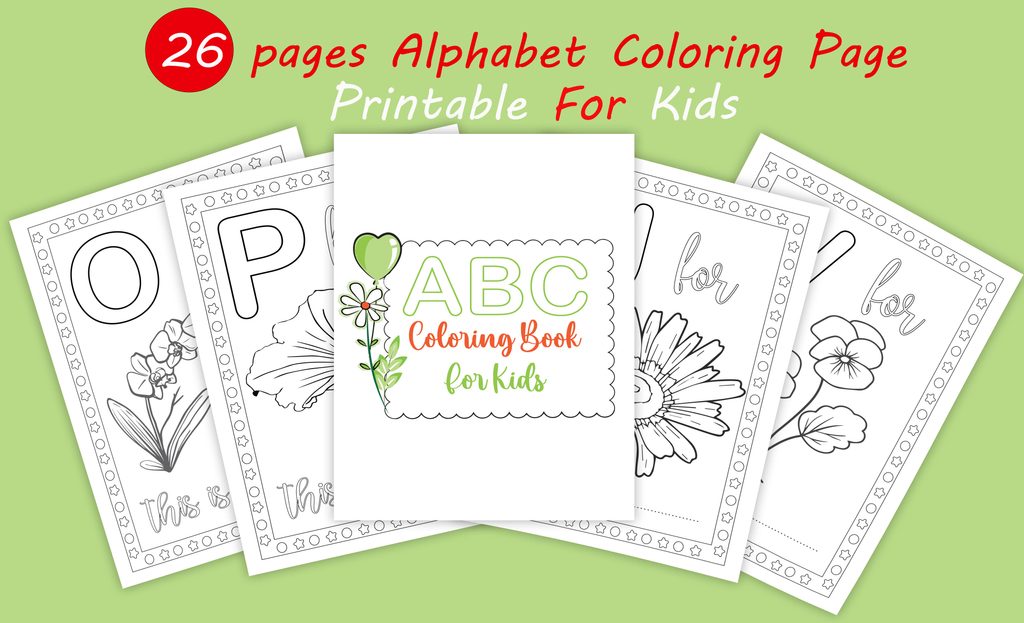
For digital products such as wall art, printable planners, coloring books, ebooks, templates, patterns, and social media graphics, the strongest results often come from combining both approaches.
This guide compares AI-generated design vs human creativity, explains the strengths and limitations of each, and shows how creators can use AI without losing the originality and personality that make a product valuable.
What Is AI Product Design?
AI product design refers to using artificial intelligence tools to help create visual or digital products.
Depending on the tool, AI can assist with:
- Generating images and illustrations
- Creating color combinations
- Producing design concepts
- Developing patterns
- Creating typography ideas
- Generating product descriptions
- Removing backgrounds
- Creating variations of an existing concept
- Developing mood boards
- Producing early design drafts
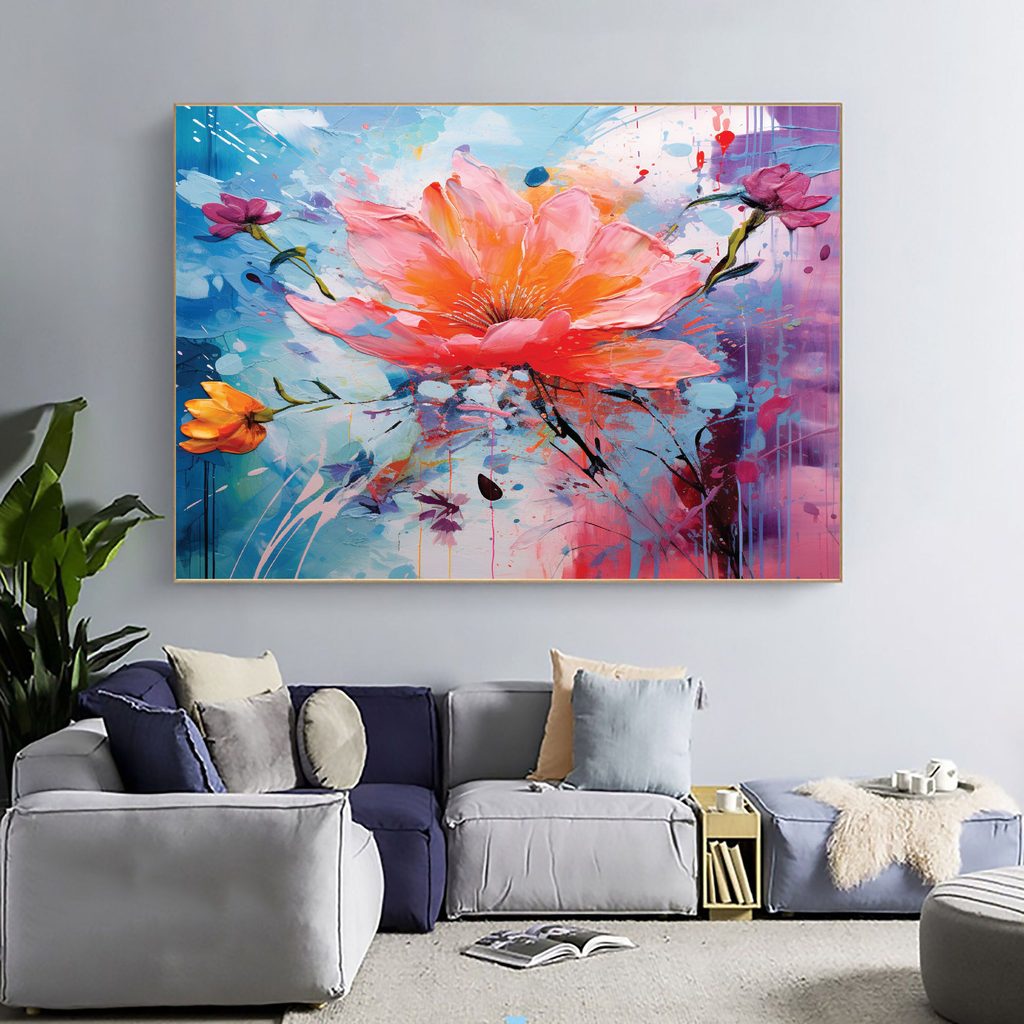
For example, a creator developing printable wall art could use AI to generate several visual concepts before selecting and refining one.
AI is particularly useful during the idea-generation stage, where producing multiple possibilities quickly can help designers explore directions they may not have considered.
However, AI-generated output still needs human judgment. A technically impressive image may not necessarily be a commercially useful product.
What Is Human Creativity in Product Design?
Human creativity involves using imagination, experience, knowledge, observation, emotion, and problem-solving to develop an original concept.
A human designer considers questions such as:
- Who will use this product?
- What problem does it solve?
- What emotions should it create?
- What visual style fits the target audience?
- Does the design communicate the intended message?
- Is it practical and easy to use?
- What makes this product different from competing products?
For example, designing a printable planner for university students requires more than creating attractive pages. The designer needs to understand how students organize classes, assignments, exams, deadlines, and personal commitments.
That understanding can influence the structure of the entire product.
AI vs Human Creativity: Key Differences
AI and human designers approach creativity from fundamentally different directions.
| Factor | AI Design | Human Design |
| Speed | Extremely fast | Usually slower |
| Idea generation | Excellent for variations | Strong for original concepts |
| Emotional understanding | Limited | Strong |
| Pattern recognition | Excellent | Strong with context |
| Personal experience | No personal experience | Based on lived experience |
| Consistency | High | Depends on workflow |
| Customization | Prompt-dependent | Highly contextual |
| Repetitive tasks | Excellent | Time-consuming |
| Cultural context | Can be inconsistent | Better contextual awareness |
| Final judgment | Requires human oversight | Naturally integrated |
| Cost efficiency | Often high | Higher labor cost |
| Strategic thinking | Limited | Strong |
Neither approach is automatically superior in every situation.
The right choice depends on the type of product, target audience, budget, timeline, and desired creative direction.
Where AI Performs Better in Product Design
Faster Idea Generation
One of AI’s biggest advantages is speed.
A designer can spend hours developing several concepts manually. An AI tool can generate numerous variations within minutes.
This makes AI useful during brainstorming.
For example, a digital product creator developing a new seamless pattern could explore floral, geometric, minimalist, vintage, and abstract concepts before selecting a direction.
Rapid Design Variations
AI can help creators experiment with different:
- Colors
- Layouts
- Styles
- Backgrounds
- Visual elements
- Compositions
- Themes
This is particularly useful when testing multiple product ideas.
Automating Repetitive Work
Some creative tasks are repetitive rather than conceptually difficult.
AI-assisted tools can help with activities such as:
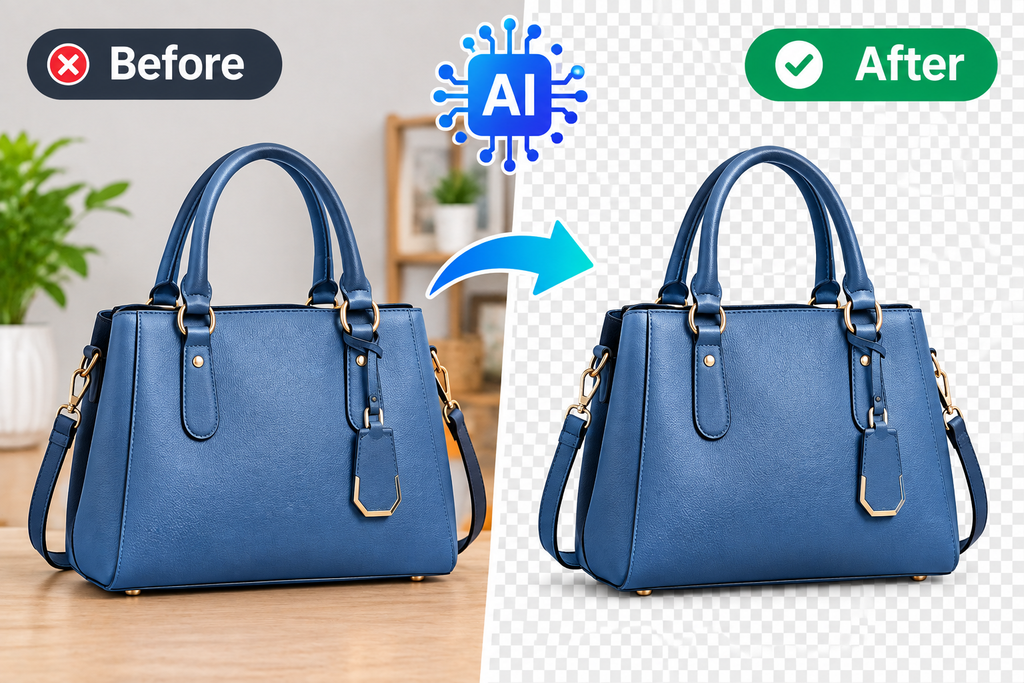
- Background removal
- Image resizing
- Basic retouching
- Object cleanup
- Image enhancement
- Pattern variations
Automating these tasks allows designers to spend more time on higher-level creative decisions.
Lower Production Barriers
AI has made certain design capabilities more accessible to beginners.
Someone without advanced illustration skills can now experiment with visual concepts and learn about composition, typography, color, and product presentation.
That does not eliminate the value of professional design skills. Instead, it changes where those skills provide the most value.
Where Human Creativity Performs Better
Understanding the Audience
Human designers can interpret customer needs in a nuanced way.
Consider two wall art products:
Design A: A technically polished AI-generated landscape.
Design B: A carefully designed minimalist print created specifically for small modern apartments.
The second design may be more commercially relevant because it was developed around a specific audience and use case.
Good product design begins with understanding the customer, not simply creating something visually attractive.
Emotional Connection
People often purchase digital products because they connect with a feeling, identity, memory, lifestyle, or aspiration.
Human designers can intentionally use:
- Storytelling
- Cultural references
- Personal experiences
- Humor
- Nostalgia
- Emotional symbolism
These elements can make a product feel more meaningful.
Strategic Creativity
Creativity is not simply producing something new.
It also involves deciding what should be created and why.
A human designer can identify an emerging customer need, recognize an underserved niche, and develop a product around that opportunity.
AI can generate options, but the strategic direction still requires human judgment.
Cultural and Contextual Awareness
Design choices can have different meanings across cultures and communities.
Colors, symbols, typography, imagery, and visual references may communicate different messages depending on the audience.
Human review is especially important when creating products for specific cultural, regional, or demographic audiences.
Can AI Create Original Designs?
AI can generate new combinations and visual outputs, but the question of originality is more complicated than simply asking whether an image looks unique.
Creators should consider:
- How the concept was developed
- What source material influenced the output
- Whether the tool’s terms permit commercial use
- Whether the final product is sufficiently differentiated
- Whether recognizable copyrighted or trademarked elements appear
- Whether human editing and creative decisions were involved
For commercial digital products, creators should always review the licensing and usage terms of the specific AI tool they use.
A creator should also avoid assuming that an AI-generated result is automatically safe for commercial publication simply because it was generated from an original prompt.
The Human-AI Design Workflow
Rather than treating AI and human creativity as competitors, creators can combine them into a single workflow.
Step 1: Start With the Customer
Before opening an AI design tool, define:
- Target customer
- Product purpose
- Customer problem
- Visual style
- Price range
- Distribution platform
This prevents AI from becoming a source of random ideas.
Step 2: Generate Concepts With AI
Use AI to explore several creative directions.
For example:
Product: Printable wall art for home offices
Possible concepts:
- Minimalist typography
- Abstract geometric shapes
- Motivational quotes
- Neutral botanical designs
- Productivity-themed illustrations
At this stage, quantity is useful.
Step 3: Select the Strongest Direction
Now apply human judgment.
Ask:
- Does the concept match the target audience?
- Is it visually distinctive?
- Does it communicate clearly?
- Could customers realistically use it?
- Does it fit the existing product collection?
Discard ideas that look impressive but do not solve a real customer need.
Step 4: Refine the Design
Human editing can improve:
- Composition
- Typography
- Spacing
- Color balance
- Visual hierarchy
- Consistency
- Print quality
This is where the designer’s expertise becomes especially valuable.
Step 5: Test the Product
Create realistic mockups and evaluate the product from the customer’s perspective.
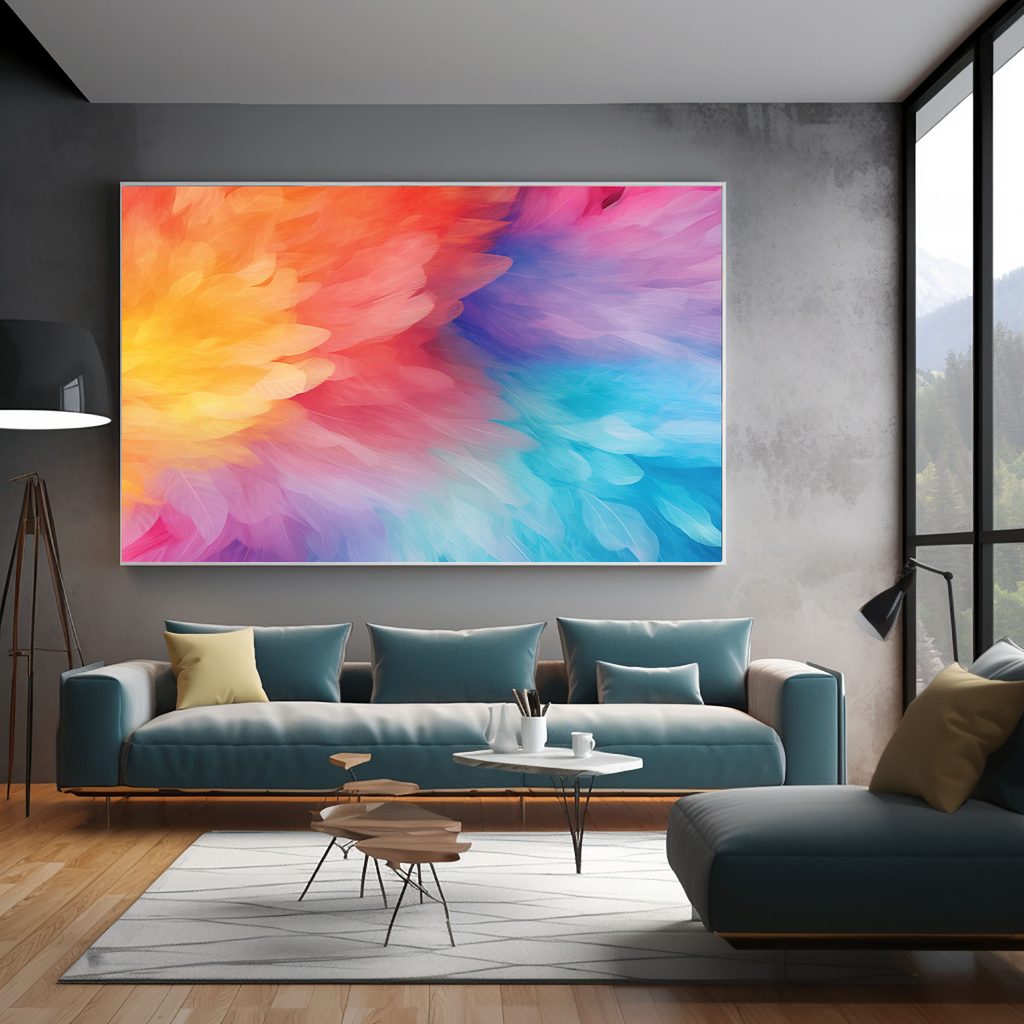
For example, a printable wall art design should be viewed inside a room mockup rather than only as an isolated image.
Ask whether the product still looks attractive in its intended environment.
Examples of AI and Human Collaboration
Example 1: Digital Wall Art
AI can generate initial visual concepts.
The designer can then:
- Choose a suitable concept.
- Modify the composition.
- Correct typography.
- Adjust colors.
- Prepare multiple print ratios.
- Create mockups.
- Export high-resolution files.
The result combines AI-assisted exploration with human-directed design.
Example 2: Printable Planner
AI might help generate decorative elements, icons, or layout ideas.
The human designer determines:
- Page hierarchy
- Navigation
- Writing space
- Calendar structure
- Usability
- Typography
- Customer workflow
For planners, usability can matter more than visual complexity.
Example 3: Seamless Patterns
AI can rapidly produce pattern concepts and motifs.
A designer can then test the repeat, correct inconsistencies, adjust scale, remove unwanted elements, and create coordinated colorways.
The human designer becomes the quality-control layer.
Common Mistakes When Using AI for Product Design
Publishing the First AI Output
The first generated image is rarely the strongest possible commercial product.
Generate alternatives and refine the selected concept.
Ignoring the Target Customer
A beautiful design without a defined audience may struggle commercially.
Always start with the customer and product purpose.
Overusing AI Aesthetics
Some AI-generated designs can develop a recognizable visual sameness.
Human customization helps create a stronger identity.
Forgetting Quality Control
Check:
- Resolution
- Spelling
- Alignment
- Proportions
- Repeating patterns
- Artifacts
- File formats
- Print dimensions
Never assume an AI-generated file is production-ready.
Ignoring Licensing
Before selling AI-assisted products, read the relevant platform and AI tool terms carefully.
Commercial-use rights can vary between tools, plans, and types of generated content.
How to Make AI-Assisted Products Feel More Human
The goal should not always be to hide AI involvement. Instead, focus on creating a genuinely useful and thoughtfully designed product.
Try these approaches:
- Add a distinctive visual style
- Use original concepts and themes
- Refine AI-generated elements manually
- Build consistent product collections
- Incorporate meaningful storytelling
- Design around a specific customer
- Create original layouts
- Test products with real users
- Improve usability based on feedback
A product becomes more valuable when customers can see evidence of thoughtful design rather than simply seeing technological novelty.
Which Is Better: AI or Human Creativity?
There is no universal answer.
AI has clear advantages when the goal is speed, experimentation, automation, and generating many visual possibilities.
Human creativity has important advantages when the task requires emotional understanding, strategic decisions, contextual awareness, usability, and a distinctive brand identity.
For many digital product businesses, a hybrid workflow offers a practical middle ground:
Human strategy → AI exploration → Human selection → Human refinement → Quality control → Customer feedback
This approach uses AI where it is efficient while keeping important creative and commercial decisions under human control.
Future of AI and Human Creativity in Digital Products
AI-assisted design is likely to become increasingly integrated into creative workflows.
Future design tools may make it easier to:
- Generate personalized products
- Adapt designs to different audiences
- Create multiple product variations
- Automate production tasks
- Analyze design performance
- Produce multilingual content
- Build complete digital product collections
As AI becomes more accessible, purely generating an image may become less valuable as a competitive advantage.
The stronger differentiator may be the ability to identify a worthwhile customer problem and build a thoughtful product around it.
In other words, creative direction, product strategy, brand identity, and customer understanding can become even more important as image generation becomes easier.
Frequently Asked Questions
Is AI better than humans at product design?
AI is faster at generating concepts and variations, while human designers bring contextual understanding, strategic thinking, emotional awareness, and quality judgment. The strengths of each approach differ depending on the product and workflow.
Can AI replace human designers?
AI can automate or assist with many design tasks, but product design also involves understanding customers, defining problems, making strategic decisions, and evaluating usability. Many workflows therefore use AI as a design assistant rather than a complete replacement for human expertise.
Is AI-generated art good for digital products?
AI-generated art can be useful for digital products when it is carefully selected, refined, quality-checked, and used according to the applicable licensing terms. Commercial suitability depends on the final product and its intended audience.
Should I use AI to create digital products?
AI can be useful for brainstorming, visual exploration, repetitive tasks, and creating variations. However, successful digital products still benefit from human research, product strategy, editing, quality control, and customer-focused design.
How can I make AI-generated designs unique?
Start with a specific product concept, develop a distinctive creative direction, refine generated elements manually, create original layouts, and build a consistent visual identity across your product collection.
What is the difference between AI design and human design?
AI design relies on machine-generated outputs based on patterns learned from its training and the instructions provided. Human design combines creativity with personal experience, strategic reasoning, cultural context, customer understanding, and intentional decision-making.
Is hybrid AI-human design the future?
AI-human collaboration is already useful for many creative workflows. A hybrid approach can combine rapid AI experimentation with human strategy, refinement, quality control, and customer insight.
Final Thoughts
The AI vs human creativity debate does not need to be a choice between two completely separate approaches. AI can make creative production faster and help designers explore more possibilities, while human creativity provides the strategic thinking, context, emotion, and judgment needed to turn an idea into a useful product.
For creators selling wall art, planners, coloring books, ebooks, patterns, templates, and other digital products, the most practical approach is to use technology where it saves time while keeping meaningful creative decisions under human direction.
Start with a customer problem, develop a clear concept, use AI when it genuinely helps, refine the result carefully, and test the finished product before publishing.
At Imagenish, explore digital products and creative resources designed with usability, visual appeal, and real-world customer needs in mind. The future of product design is not simply about creating faster—it is about creating products that people genuinely want to use.