
How Artificial Intelligence Is Transforming Digital Product Creation

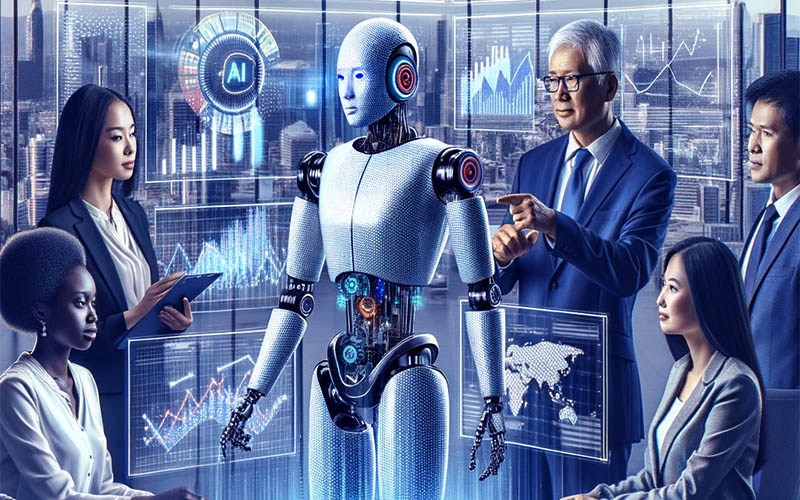
Artificial intelligence is transforming digital product creation by making it faster, more accessible, and more scalable than ever before. From printable wall art and digital planners to templates, ebooks, coloring pages, social media graphics, and educational resources, AI tools can now support almost every stage of the creative process.
For digital product sellers, this shift creates a major opportunity. Instead of spending hours starting every design from scratch, creators can use artificial intelligence to generate ideas, develop concepts, write supporting content, create visuals, improve existing designs, and streamline repetitive tasks.
But AI is not simply about producing more products. The real advantage comes from using it strategically. A successful digital product still needs originality, usefulness, strong design, clear positioning, and an understanding of what customers actually want.
This guide explains how AI is changing digital product creation, where it provides the most value, what creators should avoid, and how businesses can combine AI efficiency with genuine human creativity.
What Is AI-Powered Digital Product Creation?
AI-powered digital product creation means using artificial intelligence tools to assist with planning, designing, writing, editing, researching, and improving products that are delivered digitally.
Unlike physical products, digital products can usually be created once and sold repeatedly without manufacturing or shipping. Common examples include:
- Printable wall art
- Digital planners
- Coloring pages
- Templates
- Workbooks
- Ebooks
- Digital invitations
- Social media templates
- Educational worksheets
- Presentation templates
- Digital papers and patterns
- Business documents
- Journals and activity books

AI can contribute to several stages of the workflow, from the first product idea to the final marketing campaign.
The important distinction is that AI should function as a creative and productivity tool rather than a replacement for human judgment.
How Artificial Intelligence Is Changing Digital Product Creation
Faster Product Ideation
Coming up with profitable digital product ideas can be one of the hardest parts of running a digital shop.
AI can help creators brainstorm product concepts based on:
- Customer problems
- Seasonal demand
- Popular niches
- Specific audiences
- Existing product categories
- Different price points
- Emerging trends
For example, instead of asking AI for generic “digital product ideas,” a creator could request ideas for printable products designed for busy parents, teachers, small businesses, or home-office users.
This produces a much more focused starting point.
However, an idea generated by AI should not automatically become a product. Research the audience, competitors, search demand, and potential differentiation before investing time in production.
AI-Assisted Graphic Design
AI image generation has significantly changed the way digital creators approach visual products.
A creator can describe a desired concept and generate multiple visual directions before selecting one to refine. This can be particularly useful for brainstorming styles, compositions, color palettes, illustrations, and decorative elements.
For example, a wall-art creator might explore:
- Minimalist botanical artwork
- Scandinavian geometric designs
- Vintage botanical illustrations
- Abstract neutral artwork
- Children’s educational posters
The creator can then select the strongest concept and develop a consistent collection.
AI can therefore reduce the time spent experimenting while allowing designers to focus more heavily on refinement and product strategy.

AI for Writing Digital Products
Artificial intelligence can also accelerate text-based digital product development.
It can assist with:
- Ebook outlines
- Workbook questions
- Journal prompts
- Product descriptions
- Instructions
- Worksheet concepts
- Educational explanations
- Marketing copy
- Email campaigns
- FAQ content
For example, someone creating a productivity planner could use AI to brainstorm habit-tracking sections, reflection questions, goal-setting prompts, and organizational ideas.
The human creator should still fact-check information, edit the language, add useful expertise, and make sure the final product provides genuine value.

AI vs Traditional Digital Product Creation
| Factor | Traditional Workflow | AI-Assisted Workflow |
| Idea generation | Mostly manual | Faster brainstorming |
| Initial concepts | Created manually | AI can generate variations |
| Writing | Fully manual | AI-assisted drafting and editing |
| Design exploration | Time-intensive | Rapid experimentation |
| Repetitive tasks | Often manual | Can be automated |
| Quality control | Human-led | Human-led and essential |
| Personalization | Requires more effort | Easier to create variations |
| Scalability | Limited by available time | Greater production potential |
The biggest difference is efficiency. AI can reduce repetitive work, but it does not eliminate the need for quality control.
The Biggest Benefits of AI for Digital Product Creators
1. Reduced Production Time
AI can dramatically shorten the time needed for brainstorming, drafting, and experimentation.
A process that previously required several hours of repetitive work may be completed much faster when AI handles the initial groundwork.
This allows creators to spend more time on important activities such as market research, design refinement, customer support, and marketing.
2. Lower Creative Barriers
Not everyone is an experienced designer, writer, illustrator, or marketer.
AI-powered tools can help beginners develop initial concepts without requiring years of technical experience.
A beginner can start with a simple idea, use AI to explore possibilities, and then learn through the process of improving the results.
3. Easier Product Personalization
Personalization is increasingly valuable in digital commerce.
AI can help creators develop variations for different audiences, occasions, styles, or use cases.
For example, one printable planner could be adapted into versions for:
- Students
- Freelancers
- Parents
- Entrepreneurs
- Teachers
- Fitness enthusiasts
The core concept remains similar, but the content and presentation can be tailored to each audience.
4. More Efficient Content Marketing
Creating the product is only part of the business.
Digital products also require marketing content such as:
- SEO blog posts
- Product descriptions
- Pinterest titles
- Social media captions
- Email newsletters
- Promotional campaigns
- Frequently asked questions
AI can help create initial drafts and content variations, allowing creators to maintain a more consistent publishing schedule.
How to Use AI to Create Better Digital Products
Simply producing products faster does not guarantee sales. A better approach is to build a structured AI-assisted workflow.
Step 1: Identify a Specific Audience
Start with the customer rather than the technology.
Ask:
- Who will buy this product?
- What problem does it solve?
- Why would they choose it over alternatives?
- What format would be most convenient?
- What makes the product different?
A specific audience usually produces a stronger product than a generic market.
Step 2: Research the Market
Before creating anything, investigate existing products.
Look for patterns in:
- Product categories
- Customer reviews
- Frequently requested features
- Pricing
- Design styles
- Missing features
- Common complaints
Customer reviews can be especially valuable because they reveal what buyers like and dislike about existing products.
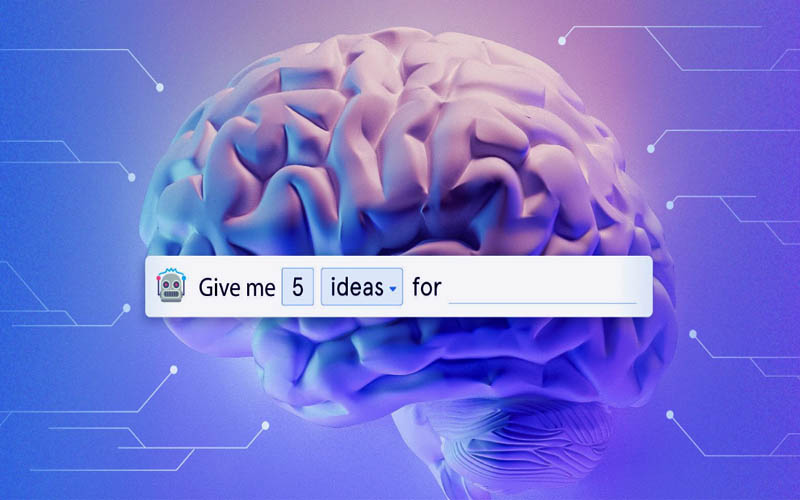
Step 3: Use AI for Brainstorming
Once the opportunity is clear, use AI to generate multiple concepts.
Instead of selecting the first idea, request several approaches and compare them.
The objective is not to publish everything AI creates. The objective is to identify the strongest opportunities.
Step 4: Create and Refine the Product
Use AI where it provides a clear productivity advantage, but keep human control over the final result.
Check:
- Spelling
- Layout
- Accuracy
- Image quality
- File dimensions
- Typography
- Consistency
- Usability
- Branding
A professional product should look intentional rather than automatically generated.
Step 5: Test Before Scaling
Create a small collection instead of immediately producing dozens or hundreds of products.
Monitor:
- Click-through rate
- Sales
- Customer feedback
- Search impressions
- Conversion rate
- Refunds or complaints
- Best-performing designs
Use these insights to improve the next product collection.
AI and Personalization: A Major Opportunity
One of the most interesting developments in digital product creation is mass personalization.
Traditional product creation often requires making one product for one audience. AI makes it easier to produce multiple relevant variations.
For example, a wedding invitation template could potentially be adapted to different:
- Names
- Color schemes
- Wedding styles
- Languages
- Typography preferences
- Layout formats
Similarly, a business planner could have versions for freelancers, agencies, photographers, consultants, and online sellers.
This creates opportunities for niche digital products that serve smaller audiences more effectively.
Common Mistakes to Avoid When Using AI
Publishing Raw AI Output
One of the biggest mistakes is treating the first AI-generated result as the finished product.
AI output may contain:
- Generic wording
- Repetition
- Incorrect information
- Strange visual details
- Inconsistent formatting
- Unnatural language
Always review and improve the final result.
Creating Too Many Generic Products
AI makes mass production easy. That can become a problem.
Publishing hundreds of nearly identical products can make a store feel repetitive and reduce differentiation.
Focus on usefulness and originality instead of volume.
Ignoring Copyright and Licensing
Creators should understand the terms governing the AI tools, fonts, images, templates, and other assets they use.
Do not assume that every AI-generated asset is automatically safe for every commercial purpose.
Check the relevant licensing terms and avoid deliberately imitating protected brands, characters, artists, or copyrighted designs.
Forgetting Human Creativity
The strongest digital products often combine technological efficiency with human insight.
Your experience, taste, research, storytelling, and understanding of customers are what turn an ordinary AI-assisted output into something valuable.
How AI Can Improve Digital Product SEO
AI can also support digital product SEO when used correctly.
It can help identify relevant keyword themes, organize content, generate initial title ideas, and develop supporting articles.
For example, a printable wall-art seller could build content around related searches such as:
- Printable wall art
- Digital wall art
- Minimalist printable art
- Printable art for living room
- Downloadable home decor
- Gallery wall printables
However, SEO should never become keyword stuffing.
Create useful content first, then naturally incorporate relevant search terms where they genuinely help readers understand the page.

The Future of AI in Digital Product Businesses
Artificial intelligence is likely to become increasingly integrated into the digital product workflow.
Future creators may use AI to assist with:
- Product research
- Trend discovery
- Automated personalization
- Design variations
- Customer segmentation
- Marketing automation
- Content creation
- Product recommendations
- Customer support
- Performance analysis
The competitive advantage will not necessarily belong to the person who uses the most AI tools.
It will belong to the creator who knows where AI adds value and where human judgment matters most.
A Practical AI Digital Product Workflow
A simple workflow for beginners can look like this:
- Research: Identify a customer problem or market opportunity.
- Plan: Define the audience, format, features, and unique selling point.
- Brainstorm: Use AI to generate several product concepts.
- Create: Develop the design, written content, or template.
- Edit: Review every AI-assisted element manually.
- Test: Ask potential customers or trusted reviewers for feedback.
- Publish: Optimize the product page for search and conversions.
- Promote: Use content marketing, social media, email, and relevant channels.
- Analyze: Track performance and customer feedback.
- Improve: Create better versions based on real-world data.
This approach keeps AI in its proper role: accelerating the workflow while the creator remains responsible for quality and direction.
Expert Tips for Selling AI-Assisted Digital Products
Prioritize the Customer Problem
Do not start with “What can AI create?”
Start with “What does my customer need?”
That simple change can dramatically improve product quality.
Build Collections Instead of Random Products
A coherent collection can create stronger branding than unrelated products.
For example, instead of selling individual printables, create a complete productivity collection containing:
- Daily planner
- Weekly planner
- Monthly planner
- Habit tracker
- Goal-setting worksheet
- Project planner
Add Human Value
Include your own expertise, organization, design decisions, research, or unique perspective.
AI can help produce the raw material. Your contribution creates differentiation.
Maintain Consistent Branding
Use consistent:
- Typography
- Layout
- Visual style
- Product photography
- Colors
- File organization
- Brand voice
Consistency makes a digital shop appear more professional and trustworthy.
Frequently Asked Questions
What is AI digital product creation?
AI digital product creation is the process of using artificial intelligence to assist with researching, planning, designing, writing, editing, and marketing digital products such as templates, printables, ebooks, planners, and artwork.
Can I use AI to create digital products and sell them?
Yes, AI can be used as part of a commercial digital product workflow, but creators should check the terms of the AI platform and the licenses of all assets they use. Products should also be reviewed and meaningfully refined before publication.
What digital products can AI help create?
AI can assist with many types of products, including printable artwork, planners, worksheets, ebooks, journals, templates, coloring pages, educational resources, invitations, patterns, and business documents.
Is AI-generated digital art profitable?
AI-generated or AI-assisted art can be commercially viable when it meets a real customer need and is presented with strong design, originality, quality, and marketing. Simply generating large quantities of generic artwork does not guarantee sales.
How can beginners use AI to create digital products?
Beginners can start by choosing a specific audience, researching customer needs, using AI for product ideas and initial drafts, refining the results manually, testing a small collection, and improving products based on customer feedback.
Will AI replace digital product designers?
AI is likely to automate many repetitive creative tasks, but human designers remain important for strategy, taste, brand identity, usability, originality, quality control, and customer understanding. The role is more likely to evolve than disappear.
What is the best way to use AI for digital product creation?
The best approach is to use AI as a productivity partner rather than a complete replacement for human creativity. Let AI handle brainstorming and repetitive tasks while you control research, positioning, quality, editing, and final decisions.
Conclusion
Artificial intelligence is transforming digital product creation by giving creators faster ways to research ideas, develop concepts, produce content, personalize products, and market their work. For beginners, it lowers the technical barrier to entry. For experienced creators, it can improve productivity and make larger product collections easier to manage.
But technology alone does not create a successful digital product business.
The winning combination is AI efficiency + human creativity + customer research + strong design + continuous improvement.
If you are building a digital product business, start small. Choose a specific audience, identify a genuine need, use AI to accelerate your workflow, and carefully refine everything before publishing.
At Imagenish, the opportunity is not simply to create more digital products. It is to create better, more useful, and more distinctive products that customers genuinely want.